info@flowtekpipes.com | +91-8700020073 | From homes to highways, Flowtek delivers trusted piping systems manufactured for strength, and safety.

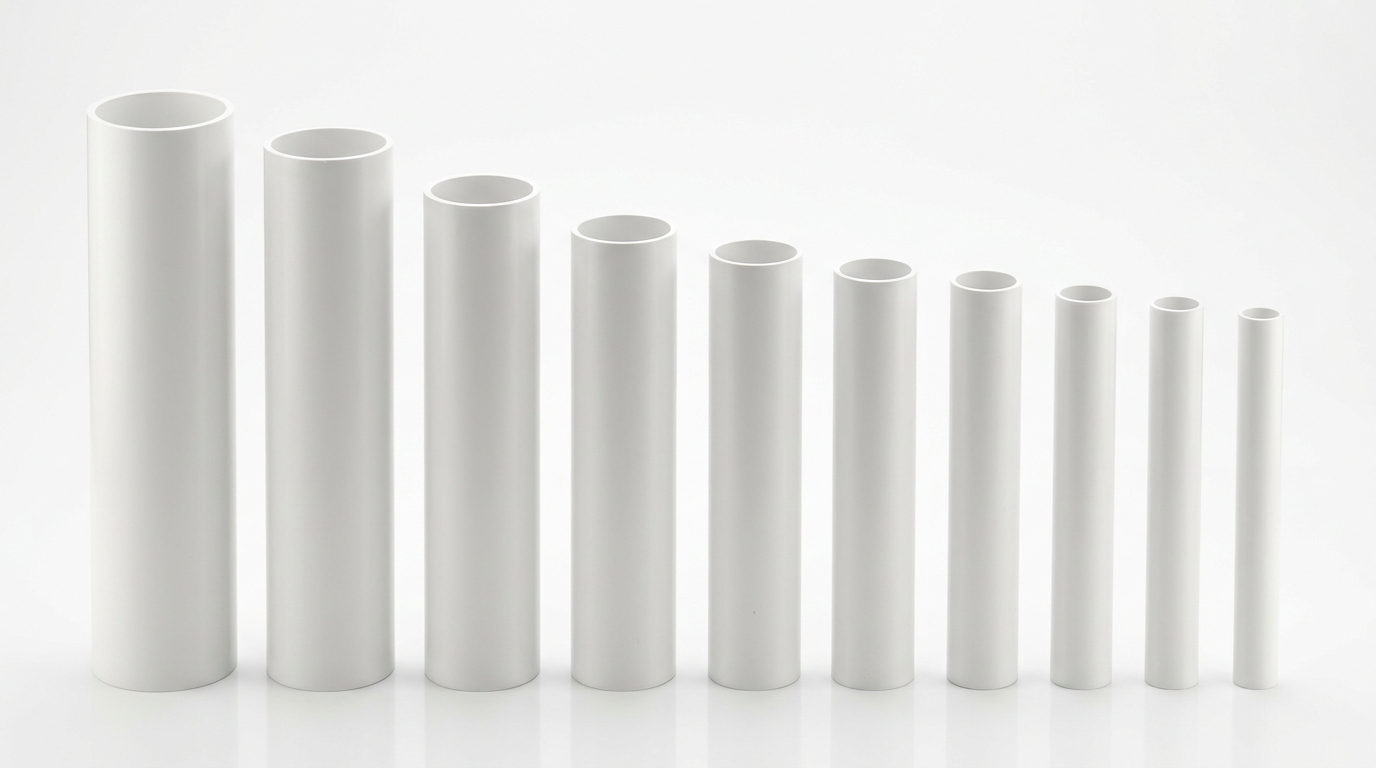
What contractors and facility teams learn — after years of chasing GI leaks — about choosing the right pipe from the start.
Nobody budgets for a pipe failure behind a finished wall. But it happens — usually three or four years after a GI system goes in, when rust and scale have been quietly doing their work. UPVC pipes were engineered to cut that cycle entirely. Made from polyvinyl chloride without plasticiser additives, the material stays rigid, chemically stable, and indifferent to whatever the water inside is carrying. This blog covers exactly where the maintenance savings come from — and what to verify before placing an order.
GI pipes corrode from the inside out. Scale follows rust, bore narrows, pressure drops, and eventually the section fails. UPVC pipes skip that sequence entirely — the wall is inert to water electrochemically. A riser installed a decade ago looks and flows the same as day one. Zero rust remediation, zero section replacement.
Residents on upper floors of older buildings often complain about pressure. The pipe hasn't burst — it's narrowed. Mineral deposits coat rough metal walls over years. A plastic pipe with a smooth internal surface doesn't allow that build-up to anchor, so the flow rate you designed for is the flow rate you get throughout the system's life.
Threaded GI connections rely on tape and torque — both degrade. When you source from reputable UPVC Pipes & Fittings Manufacturers in India, the pipe and fitting are dimensionally matched. Solvent cement fills the joint completely and the two pieces effectively become one. No re-tightening. No PTFE top-ups mid-project.
A bathroom pipe running through an exterior wall in North India cycles from near-freezing to 45°C-plus across the year. Metal expands and contracts at joints; repeat enough times and the connection works loose. UPVC has a much lower thermal expansion coefficient, and the solvent-welded joint has no mechanical interface to fatigue in the first place.
Here are the use cases:
A general material comparison for procurement managers and specifying engineers:
| Parameter | UPVC | Galv. Iron | Cast Iron | HDPE |
|---|---|---|---|---|
| Corrosion Resistance | Excellent | Poor | Moderate | Excellent |
| Installation Effort | Low | High | Very High | Moderate |
| Maintenance Frequency | Very Low | High | High | Low |
| Service Life (Yrs) | 50+ | 15–25 | 20–30 | 40–50 |
| Chemical Resistance | High | Low | Low | High |
| Relative Weight | Very Light | Heavy | Very Heavy | Light |
Here are some advantages and disadvantages:
Housing developers, civil contractors, facilities managers, and irrigation consultants — basically anyone whose maintenance log is filling up because of a pipe material that was never going to outlast the structure it serves. If your current plumbing pipe specification is based on habit rather than lifetime cost, this is the straightforward alternative.
A Delhi housing society replaced GI risers across four towers using UPVC Plumbing Pipes & Fittings in late 2021. Before the switchover, the maintenance register showed 12 to 16 plumbing call-outs per month. In the following 12 months: two or three — both valve-related, not the pipe. Upper-floor residents who had raised pressure complaints for years stopped filing them after the first summer. Procurement teams buying UPVC Pressure Pipes & Fittings regularly cite wall-thickness consistency as the factor that keeps on-site jointing failures near zero across large orders.
Flowtek Pipes & Fittings is an Indian company manufacturing piping systems of high quality to be used in residential, agricultural, industrial, and infrastructure projects. The company began its operations with the objective of providing solid and robust pipes, which are capable of performing at a high level with low prices. It has over the years expanded into a modern manufacturing firm with efficient technology of extrusion and mold costing as well as stringent quality control measures. Flowtek has a variety of products such as CPVC, UPVC, SWR, and agriculture pipes and fittings that are developed to be of long life, leak free, and easily installed. The company has an effective distribution channel, good dealer network, customer-orientated strategy, and timely supply across India; hence, the company is guaranteed timely supply, technical assistance, and long-term association.
Ans: "upvc full form" is Unplasticised Polyvinyl Chloride. No plasticiser means the pipe stays rigid, doesn't creep under pressure, and won't leach chemicals into your water supply — ever.
Ans: Field data from real Indian projects — not lab tests — consistently shows 50-plus years of serviceable life, provided the pipe is installed within its rated pressure and kept below 60°C.
Ans: Yes — but only if the pipe carries a valid BIS mark for IS 4985. Always check the mark on the pipe itself, not just on the invoice or outer packaging.
Ans: Absolutely — it's one of their strongest applications. The material is inert to most soil types and groundwater chemistries found across India, which is why buried municipal water networks rely on it heavily.
Ans: Old GI pipes narrow over time as scale builds up inside. UPVC bores don't accumulate deposits, so the flow diameter stays the same from installation day to year thirty and beyond.
Ans: Search "upvc near me" to find local dealers — but always cross-check they're authorised and can supply proper batch documentation. A good supplier backs every delivery with paperwork, not just a verbal assurance.
The maintenance cost case for UPVC pipes is built on what actually happens to buildings over 10, 20, and 30 years — not projections. Metal corrodes. Joints loosen. Bore narrows. None of that applies to a properly installed polyvinyl chloride system. For any project where long-term running cost matters as much as capital cost, getting the pipe specification right at the start is one of the clearest decisions available.
Connect with Flowtek — share your project scope and their team will spec the right UPVC system for you.
Discover how agriculture pipes support seasonal crop rotation. Learn about PVC pipe selection, irrig
See what serious buyers check in PVC irrigation pipes, from quality and pressure ratings to manufact