info@flowtekpipes.com | +91-8700020073 | From homes to highways, Flowtek delivers trusted piping systems manufactured for strength, and safety.

The Costly Pipe Mistake Most Buyers Don't Realize Until It's Too Late
Picture the scenario. A farmer in Maharashtra spends close to ₹80,000 getting a borewell drilled 400 feet deep. The pump is installed, water starts flowing — and within eighteen months, the pump is pulling air. Borewell walls have partially collapsed. Pipe joints are leaking. The water supply is unreliable, sometimes absent entirely during summer.
The drilling wasn't the problem. The pump wasn't the problem. The problem was that the wrong pipe was used in the wrong position — and nobody caught it until the damage was already done.
This plays out more often than most borewell contractors like to admit. Casing pipes and column pipes look similar. Both are cylindrical, both go into the ground and both are associated with borewells. But they serve entirely different functions – and confusing one for the other is an expensive mistake that borewell contractors, submersible pump installers, farmers and infrastructure developers cannot afford.
A casing pipe is the structural backbone of any borewell. Once a borewell is drilled, the surrounding soil and rock are unstable — particularly in sandy, loose or layered geological formations. Without a rigid pipe lining the walls, the cavity collapses inward, traps the pump and renders the entire well useless.
The borewell casing pipe is inserted into the drilled hole to prevent exactly these issues. It lines the wall, keeps the structure open and stable and protects the interior from soil intrusion, sediment and surface water contamination. It does not carry water to the surface — its job is to keep the borewell structurally intact so that the equipment installed inside it can work reliably.
Common materials for casing pipes include:
Slot patterns are sometimes cut into casing sections at water-bearing zones, allowing groundwater to enter from the surrounding aquifer. This is a casing-specific function that column pipes never share. Reputable casing pipe manufacturers produce these to precise outer diameter standards so they fit snugly within the drilled borewell without gaps.
Now here's the pipe doing the heavy lifting — literally.
A column pipe connects the submersible pump at the bottom of the borewell to the surface outlet. When the pump runs, water travels upward through this pipe under pressure, rising sometimes hundreds of feet before reaching the surface. The entire column of water inside the pipe at any given moment puts an enormous downward load on the joints and fittings — which is why this pipe must be built to a fundamentally different standard than structural casing.
Did You Know? A fully water-filled column pipe can carry hundreds of kilograms of load depending on borewell depth.
The demands are severe: continuous water flow, sustained internal pressure, heavy axial load, exposure to varied groundwater chemistry, and mechanical vibration from the pump itself. Pipes that aren't built to handle all of these conditions simultaneously will fail — through joint leakage, structural fatigue, or gradual deformation.
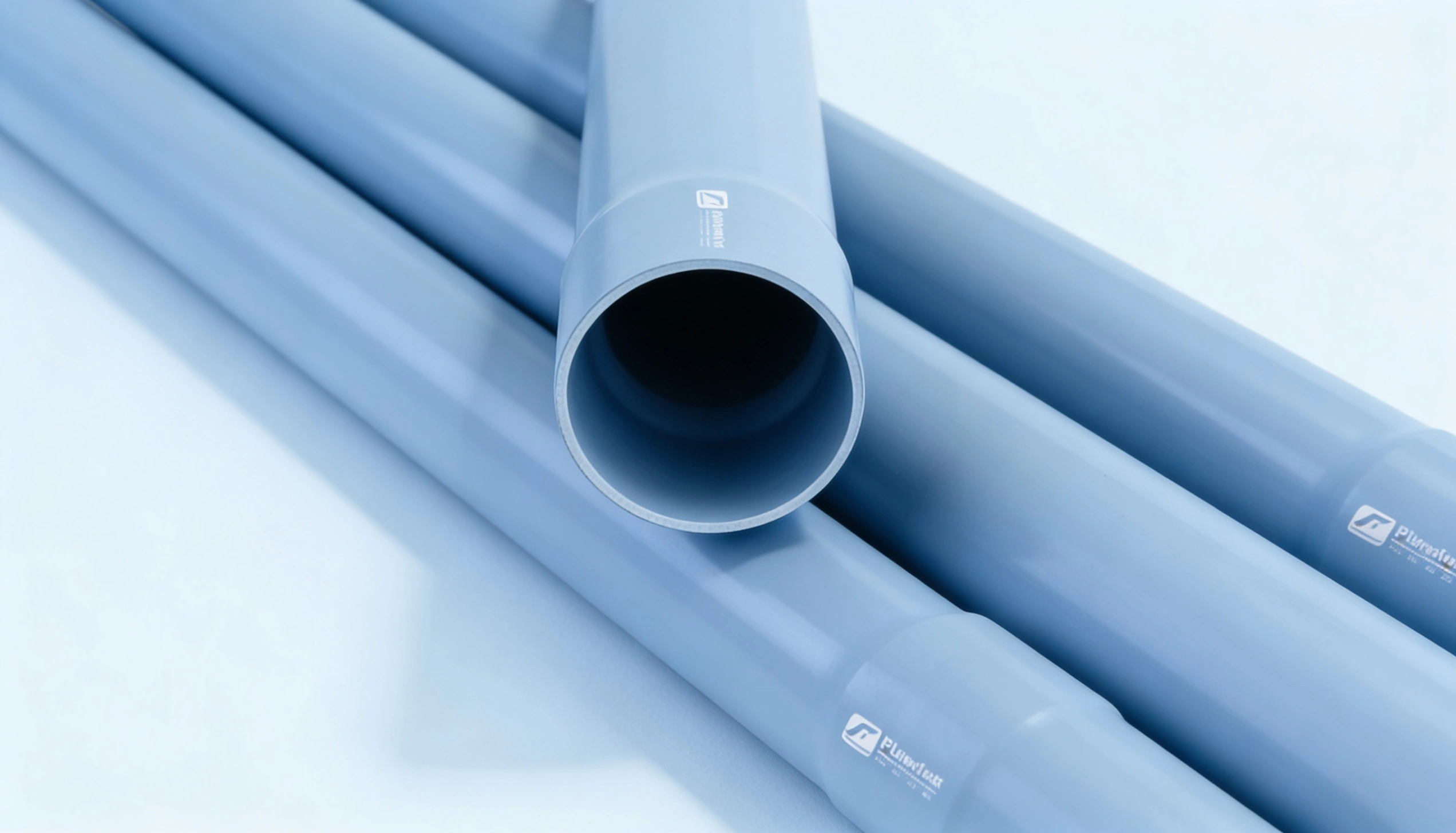
This situation is exactly where Flowtek Pipes & Fittings column pipes stand apart from ordinary market alternatives. Engineered for real borewell conditions, Flowtek's UPVC column pipes are built around the performance demands that installers and end-users actually face.
What makes Flowtek column pipes the right specification:
Fun Fact: Even small internal friction losses inside pipes can increase long-term electricity costs noticeably.
For submersible pump installers, joint quality in a threaded column pipe is not a minor detail. It is the difference between a system that stays reliable and one that requires repeated costly intervention. Flowtek's manufacturing standards address this directly.
Here's a practical breakdown any buyer can use.
Function: The casing pipe is structural — it holds the borewell walls open. The column pipe is operational — it carries water from the pump to the surface.
Position: Casing sits against the borewell wall as an outer lining. Column pipe runs vertically through the interior, directly connected to the submersible pump at the bottom.
Pressure type handled: Casing manages radial geological pressure from surrounding soil. Column pipe handles internal water pressure and the axial weight of the water column above it.
Material priorities: For casing, rigidity and structural strength matter most. For column pipe, pressure resistance, joint integrity, and corrosion resistance are what define long-term performance.
Failure consequence: Failed casing means borewell collapse — often irreversible without redrilling. Failed column pipe means water supply loss, pump damage, and expensive down-borewell repair work.
Both pipes are necessary. Neither is optional. But treating them as interchangeable is what causes the failures that cost buyers far more than the pipes themselves.
Wrong pipe selection rarely shows up immediately. The issues develop over months — sometimes over a year — before the consequences become obvious. By then, repair costs far exceed what a correct specification would have added to the original installation.
Pump damage from joint leakage — When column pipe joints fail under pressure, air enters the system. The pump runs dry, overheats, and burns out. Pump replacement costs routinely run three to five times more than the pipe upgrade that would have prevented it.
Borewell collapse from inadequate casing — Using undersized or lightweight casing in unstable geology invites gradual wall failure. Recovering a collapsed borewell often means redrilling entirely from scratch.
Water contamination — Degraded joints or cracked pipe sections allow soil, sediment, or surface runoff to enter the water supply. In agricultural and drinking water applications, this creates both a cost problem and a health risk.
Reduced pump efficiency — Rough internal surfaces, partial joint failures, or pipe deformation restrict flow and force the pump to work harder. Electricity consumption rises. Pump lifespan shortens. The economics get progressively worse.
The common thread: all of this was preventable at the point of pipe selection.
Ten years ago, galvanised iron column pipe was the default for most borewell installations. Today, experienced contractors across India have largely shifted to UPVC — and the reasons are practical, not just promotional.
GI pipe corrodes. It is heavier to handle, slower to install, and its threaded joints are more prone to failure over time as the metal threads wear and oxidise. The maintenance cycle on a GI column pipe system is noticeably more demanding than on a well-made UPVC alternative.
Trivia: Many installers now prefer UPVC column pipes because installation time can be reduced significantly compared to metal pipes.
UPVC changed the economics of borewell installation in several meaningful ways:
Flowtek Pipes & Fittings has built its industrial column pipe range specifically around these priorities — manufacturing for the performance conditions that borewell installations actually create, not just laboratory specifications.
Not every UPVC pipe on the market is manufactured to the same standard. Quality variation in India's industrial piping market is real enough that buyer diligence has a measurable financial impact.
When evaluating column pipe manufacturers and column pipe suppliers, these are the factors worth scrutinising:
Wall thickness and pressure rating — Confirm pressure ratings are appropriate for your installation depth. Get this in writing from specifications, not just verbal assurances.
Thread quality — Poorly cut threads fail under sustained load. Ask to inspect sample joints. This is the single most important physical quality indicator for a column pipe.
IS standards certification — Baseline manufacturing compliance for UPVC pipes. Any credible manufacturer has this documentation available immediately.
Technical support — Manufacturers who can advise on pipe selection for specific depths, pump specifications, and geological conditions offer real value. Those who only compete on price generally cannot.
Stock reliability — A supplier who regularly runs short on inventory or misses delivery windows creates project risk that typically costs more than any price saving they offer.
Flowtek Pipes & Fittings has built its position in India's industrial piping market through consistent manufacturing quality and a practical understanding of what borewell contractors, farmers, and infrastructure developers actually need from a piping partner.
The column pipe range is produced under stringent quality controls — every batch is tested for dimensional accuracy, pressure performance, and joint integrity. Materials meet relevant IS standards. The manufacturing process is built to eliminate the inconsistencies that cause field failures.
Beyond the product, Flowtek's technical team understands borewell applications at a working level — which means the guidance buyers receive is genuinely useful for their specific installation conditions, not generic specification-sheet advice.
The product range covers standard and heavy-duty column pipes across the sizes and pressure ratings that serve the majority of borewell and submersible pump applications across India. Stock is managed to support both planned project purchases and urgent replacement requirements.
Casing pipes and column pipes solve different problems. One holds the borewell structure together. The other carries water from several hundred feet underground to where it's needed. Using either incorrectly – or specifying poor quality in either position – puts the entire system at risk.
The long-term savings from getting this right upfront — in avoided pump replacements, avoided borewell rehabilitation, and avoided supply disruptions — consistently and significantly outweigh the short-term cost difference between quality and budget pipe options.
For contractors, developers and buyers who need a column pipe supplier they can depend on, Flowtek Pipes & Fittings delivers the product quality, technical depth and supply reliability that serious installations require.
Contact Us for specifications, pricing, and technical guidance built around your project.
Flowtek Pipes & Fittings — Built for the Depth of Your Demands.
Here are the most asked questions related to ENT instruments.
FAQs
Q1. What is the difference between a casing pipe and a column pipe?
A casing pipe supports the borewell structure, while a column pipe carries water from the pump to the surface. Flowtek Pipes & Fittings offers durable UPVC column pipes for reliable borewell systems.
Q2. Which pipe is used for submersible pumps in borewells?
Column pipes are used with submersible pumps to lift water safely under pressure. Flowtek Pipes & Fittings manufactures heavy-duty UPVC column pipes for deep borewell applications.
Q3. Why is UPVC column pipe better than GI column pipe?
UPVC column pipes are rust-proof, lightweight, long-lasting, and easier to install than GI pipes. Flowtek Pipes & Fittings provides high-strength UPVC column pipes with low maintenance needs.
Q4. What happens if you use the wrong pipe in a borewell?
Wrong pipe selection can cause leakage, pump failure, borewell collapse, and water contamination. Flowtek Pipes & Fittings helps buyers choose the right column pipe for long-term performance.
Q5. What should I check when buying a column pipe for a borewell?
Check pressure rating, wall thickness, thread quality, and IS certification before buying. Flowtek Pipes & Fittings offers certified UPVC column pipes for different borewell depths.
Q6. What is the price of UPVC column pipes in India?
UPVC column pipe prices depend on size, pressure rating and pipe thickness. Flowtek Pipes & Fittings provides competitively priced column pipes with dependable quality and support.
Discover how agriculture pipes support seasonal crop rotation. Learn about PVC pipe selection, irrig
See what serious buyers check in PVC irrigation pipes, from quality and pressure ratings to manufact